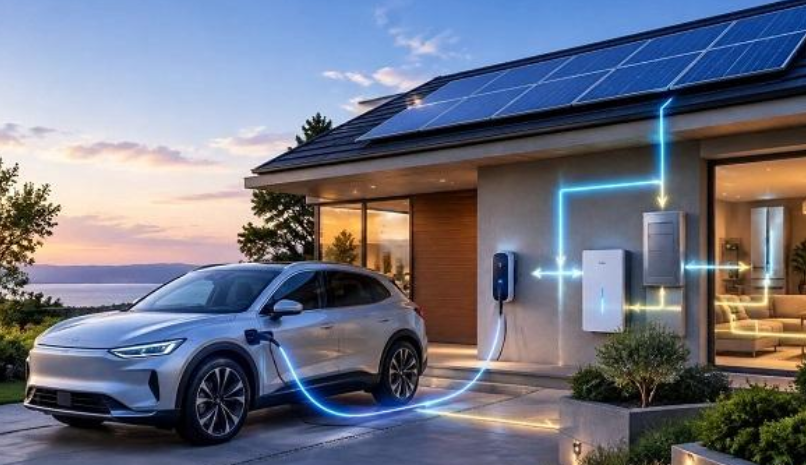
Germany Turns Electric Vehicles into “Mobile Power Plants”
Germany has taken a significant step toward transforming electric vehicles and home batteries into active participants in the electricity market by adopting new regulations for integrating energy storage systems and charging points.
Germany’s Federal Network Agency (Bundesnetzagentur) has approved regulations known as MiSpeL, designed to establish a framework for utilizing distributed energy storage capacity within the electricity grid. These regulations came into effect in early October 2026 and could pave the way for the wider use of millions of electric vehicles and home batteries as flexible energy resources.
The End of the Era of Electric Vehicles as Mere Energy Consumers
Until now, electric vehicles have primarily been regarded as energy consumers within the electricity grid. As their numbers increase, they can place additional pressure on the grid during peak consumption hours.
However, with the development of bidirectional charging technology, these vehicles can play a role that extends beyond simply consuming electricity. Under this model, vehicle batteries can be charged when demand is low or renewable energy generation is high. During periods of peak demand, they can return some of their stored energy to the grid.
As a result, electric vehicles can evolve from passive energy consumers into flexible resources for grid management. When deployed across millions of vehicles, this capability could have a significant impact on load management and balancing electricity supply and demand.
Smart Metering: The Core Infrastructure Behind the New Model
One of the main challenges in using electric vehicles and home batteries as energy resources is accurately measuring electricity flows and distinguishing between different energy sources.
Germany’s new regulations focus on measurement in 15-minute intervals, establishing a framework for accurately distinguishing electricity drawn from the grid from energy generated by renewable sources and energy stored in batteries.
This capability is essential for accurately calculating costs, providing legally established incentives, and settling payments for electricity fed back into the grid.
A transition period extending until September 30, 2027, has been established to support the full implementation of this infrastructure. This will give electricity distribution companies and grid operators sufficient time to upgrade their software, energy management systems, and smart metering equipment.
Germany’s Experience and Lessons for Iran’s Power Industry
Germany’s experience with Distributed Energy Resources (DERs) offers valuable insights into the future of Iran’s electricity industry.
1. Intelligent Load Management
Given the imbalance between electricity supply and demand during peak consumption periods, electric vehicle batteries could become an important tool for load management. If this technology is widely adopted, networks of connected vehicles could operate as a Virtual Power Plant (VPP), helping maintain grid stability during critical periods.
2. Building an Energy Storage Economy
Germany’s experience demonstrates that transparent mechanisms for purchasing, selling, and settling transactions involving stored energy can encourage private-sector investment in home batteries, electric vehicles, and smart charging stations.
3. Developing Smart Metering Infrastructure
Advanced demand management models cannot be implemented without appropriate metering infrastructure. Smart meters and accurate measurement systems are essential prerequisites for real-time consumption management, load control, and the effective utilization of distributed energy resources.
Moving from “More Generation” to “Intelligent Energy Management”
Recent developments in Germany’s energy system demonstrate that the future of electricity grids does not depend solely on increasing generation capacity. The intelligent use of energy storage, demand management, smart meters, and distributed energy resources can become one of the fundamental pillars of future power grids.
Under this model, electric vehicles, home batteries, and other storage resources are no longer merely energy consumers. Instead, they can become integral components of grid management solutions and help increase the flexibility of the electricity system.
This approach also offers important lessons for countries such as Iran, particularly as load management, reducing electricity supply-demand imbalances, and developing smart infrastructure become major priorities for the power industry.